 Stowcase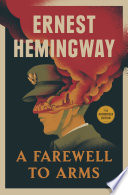
A Farewell to Arms
Scribner · 1995-06-01 · 352 pages
Not rated
Stowcase Rating
About Ernest Hemingway
Ernest Miller Hemingway ( HEM-ing-way; July 21, 1899 – July 2, 1961) was an American novelist, short-story writer, and journalist. Known for an economical, understated style that influenced later 20th-century writers, he has been romanticized for his adventurous lifestyle and outspoken, blunt public image. Some of his seven novels, six short-story collections and two non-fiction works have become classics of American literature, and he was awarded the 1954 Nobel Prize in Literature. Hemingway was raised in Oak Park, Illinois. After high school, he spent six months as a reporter for The Kansas City Star before enlisting in the Red Cross. He served as an ambulance driver on the Italian Front in World War I and was seriously wounded by shrapnel in 1918. In 1921, Hemingway moved to Paris, where he worked as a foreign correspondent for the Toronto Star and was influenced by the modernist writers and artists of the "Lost Generation" expatriate community. His debut novel, The Sun Also Rises, was published in 1926. In 1928, Hemingway returned to the U.S., where he settled in Key West, Florida. His experiences during the war supplied material for his 1929 novel A Farewell to Arms. In 1937, Hemingway went to Spain to cover the Spanish Civil War, which formed the basis for his 1940 novel For Whom the Bell Tolls, written in Havana, Cuba. During World War II, Hemingway was present with Allied troops as a journalist at the Normandy landings and the liberation of Paris. His novella The Old Man and the Sea was published in 1952 to widespread acclaim and won the Pulitzer Prize for Fiction. Hemingway was seriously injured in two plane crashes during a trip to Africa in 1954, leaving him in pain and ill health for much of the rest of his life. He died by suicide at his house in Ketchum, Idaho, in 1961.
Wikipedia · CC-BY-SA-4.0 · Adapted from Wikipedia contributors. The text has been modified.
As an Amazon Associate I earn from qualifying purchases.